Book Palazzo Vecchio Tickets
Don’t Just Visit Florence. Walk the Halls of Power.
Skip the line and step inside the fortress that defined the Renaissance. From the towering heights of the Arnolfo Tower to the secrets of the Medici hidden in the Hall of the Five Hundred, your journey into the heart of history starts here.
✓ Instant 2026 Digital Tickets - independent ticket reseller
✓ Priority Skip-the-Line Access
✓ 100% Mobile Friendly – No Printing Required
The Ultimate Guide to Palazzo Vecchio: Florence’s Fortress of Art, Power, and History
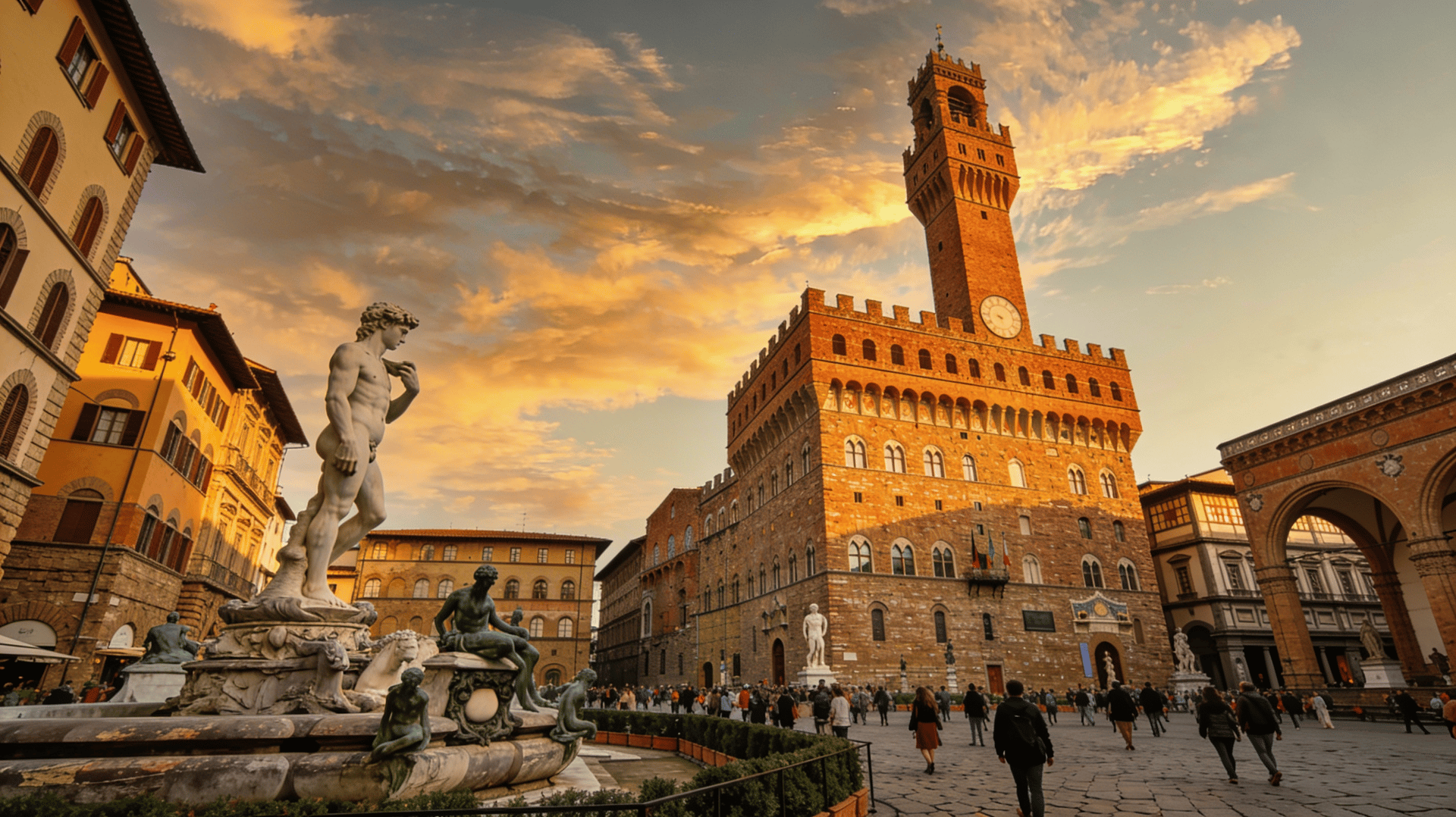
Standing as a rugged, crenelated sentinel over the Piazza della Signoria, is far more than a museum; it is the physical heartbeat of Florence. For over seven centuries, this “Old Palace” has functioned as the seat of government, a ducal residence for the legendary Medici family, and a repository for some of the greatest artistic achievements of the Italian Renaissance.
Whether you are an art historian, a casual traveler, or a fan of Dan Brown’s Inferno, a visit to Palazzo Vecchio is essential to understanding the evolution of Western civilization. However, as one of Italy’s most visited landmarks, navigating the logistics—from securing palazzo vecchio tickets to finding the hidden Secret Passages—requires a strategic approach. Advance booking of your tickets is highly recommended to avoid long waits and streamline your visit. Securing a reservation in advance is essential for a smooth experience.
This definitive guide provides the expertise and practical insights needed to plan an unforgettable journey into the heart of the Florentine Republic.
A Legacy of Stone: The History of Palazzo Vecchio
To appreciate the palace today, one must understand the layers of history beneath its foundation. The site originally housed an ancient Roman theater, the ruins of which can still be explored today via specific combined tickets.
Construction on the current fortress began in 1299, led by Arnolfo di Cambio, the same architectural genius behind the Florence Cathedral. Originally called the Palazzo della Signoria, it was built to house the Priori (the governing body of the Republic). It wasn't until the mid-16th century, when Grand Duke Cosimo I de' Medici moved his court here, that the interior was transformed from a stern government office into a lavish princely residence.
The name "Palazzo Vecchio" (Old Palace) was adopted only after the Medici moved their primary residence across the Arno River to the Pitti Palace, leaving this building to serve as a secondary administrative hub. Today, it remains the seat of the Mayor of Florence and the City Council, a rare example of a medieval palace that has never lost its original function.
Planning Your Visit: Securing Palazzo Vecchio Tickets
Before planning your visit, always check the most up-to-date information for your chosen date to ensure accurate opening hours, ticket availability, and any special requirements.
In the post-pandemic travel landscape of 2026, Florence has seen record-breaking visitor numbers. Consequently, the Museo di Palazzo Vecchio has implemented strict crowd-control measures.
1. Booking in Advance
It is no longer advisable to "walk up" and buy tickets. The queue for the ticket office can often exceed two hours during peak season (May through September). To maximize your time, you should book your Palazzo Vecchio tickets online. Digital tickets come with a specific time slot, allowing you to enter via the priority line.
2. Understanding the Ticket Tiers
Entry is not "one size fits all." Depending on your interests, you can choose from several options:
The Museum Ticket: Grants access to the monumental quarters and the Hall of the Five Hundred.
Arnolfo Tower Tickets: Required specifically for those wishing to climb the tower. Note that these are limited to small groups per time slot.
The Archaeological Site: Discover the Roman theater ruins beneath the palace floors.
Combined Passes: Usually the best value, offering entry to the Museum, the Tower, and the Archaeological site in one go.
3. Updated 2026 Pricing and Cashless Policy
As of early 2026, a standard adult ticket for the museum is priced at €18. In line with modern Italian tourism standards, Palazzo Vecchio is a cashless facility. Ensure you have a major credit card or mobile payment (Apple/Google Pay) ready for any on-site purchases, including the wardrobe and bookstore.
Architectural Marvels: What to See Inside
The transition from the exterior’s medieval austerity to the interior’s High Renaissance opulence is one of the most dramatic experiences in Florence.
The Salone dei Cinquecento (Hall of the Five Hundred)
This is the "crown jewel" of the palace. Built in 1494, it was designed to hold the 500 members of the Great Council.
The Vasari Frescoes: Massive paintings by Giorgio Vasari depict Florentine military victories. Look closely for the famous "Cerca Trova" (Seek and Ye Shall Find) inscription, rumored to be a clue to a lost Leonardo da Vinci masterpiece hidden behind the wall.
Michelangelo’s "Genius of Victory": Standing in one of the niches, this sculpture was originally intended for the tomb of Pope Julius II but found its home here.
The Apartments of the Elements and Eleonora of Toledo
Cosimo I’s wife, Eleonora of Toledo, had her own suite of rooms, which are masterpieces of decorative art. The Chapel of Eleonora, painted by Bronzino, is a vivid display of Mannerist beauty that remains one of the best-preserved fresco cycles in the city.
The Hall of Geographical Maps
For fans of history and cartography, this room is a highlight. It contains 53 large maps painted on leather, showing the world as it was understood in the 16th century. In the center sits the Mappa Mundi, which, at the time of its creation, was the largest rotating globe in the world.
Climbing the Arnolfo Tower
If you are looking for the most iconic view of the Florence skyline, you must secure Arnolfo Tower tickets. Rising 94 meters above the city, the tower offers a unique vantage point where the Duomo feels close enough to touch.
Essential Tips for the Climb:
Physical Requirement: There are 233 steps. While the climb is manageable for most, it is steep and narrow.
Age Limits: For safety and insurance reasons, children under 6 years old are strictly prohibited from climbing the tower.
Weather Conditions: In the event of heavy rain or high winds, the tower may be closed to the public for safety. If this happens, your tower-specific ticket can usually be refunded or rescheduled.
Behind the Scenes: The Secret Passages Tour
For those who want to move beyond the standard tourist path, the Secret Passages tour is a must. These guided experiences take you through hidden doors, behind tapestries, and into the "studiolo" (private study) of Francesco I de' Medici.
These passages were designed for two reasons: privacy and escape. During the Medici reign, the palace was a place of constant political tension. These hidden hallways allowed the family to move through the building—and even across the city via the Vasari Corridor—without being seen by the public or potential assassins.
Expert Tip: These tours are limited to 12 people per session. You must book these weeks in advance through the official museum portal or a verified tour operator.
Audio Guides and Visitor Resources
Enhance your journey through the Palazzo Vecchio Museum with the help of a multilingual audio guide, designed to bring the palace’s rich history and hidden secrets to life. Available in several languages, the audio guide offers in-depth commentary on the palace’s most iconic spaces, including the awe-inspiring Salone dei Cinquecento, the private chambers of the Medici family, and the architectural marvels that define this monument symbol of Florence. Whether you’re fascinated by the stories behind the art or eager to uncover the palace’s lesser-known corners, the audio guide provides expert insights at every turn.
You can purchase the audio guide directly at the ticket office or reserve it in advance when booking your ticket through the official site. For those who prefer a digital experience, the museum also offers a mobile app that transforms your smartphone into a personal tour companion. The app features virtual tours, detailed stories about the palace’s history, and highlights masterpieces by artists such as Michelangelo and Donatello. With these resources, visitors can explore at their own pace, ensuring a deeper appreciation of the palace’s art, architecture, and the enduring legacy of the Medici. Whether you’re a first-time visitor or a returning admirer, these tools make every visit to Palazzo Vecchio a truly immersive experience.
Planning Your Logistics: Opening Hours and Directions
Palazzo Vecchio is centrally located in Piazza della Signoria, within walking distance of the Uffizi Gallery and the Ponte Vecchio.
Opening Hours (Standard): 9:00 AM to 7:00 PM.
Thursday Early Closure: On Thursdays, the museum typically closes at 2:00 PM. This is a common pitfall for tourists—plan your week accordingly!
Evening Openings: During the peak summer months, the palace sometimes offers "Night at the Museum" hours, staying open until 11:00 PM. This is the most atmospheric time to visit.
Why a Guided Tour is Worth It
While you can certainly explore the palace with an audio guide, Palazzo Vecchio guided tours offer a level of depth that is hard to achieve alone. A professional guide can point out the political propaganda hidden in the paintings, explain the complex symbolism of the ceiling panels, and share the "gossip" of the Medici court that has survived for centuries.
When selecting a tour, look for those that offer skip-the-line privileges. This ensures that your limited time in Florence is spent admiring art rather than standing on cobblestones.
Exploring Beyond the Walls: Nearby Attractions
Once you’ve explored the wonders of the Palazzo Vecchio Museum, step outside into the heart of Florence and discover a city brimming with history and artistic treasures. The Piazza della Signoria, right at the palace’s doorstep, is a vibrant open-air gallery featuring the iconic replica of Michelangelo’s David and a host of Renaissance sculptures. Just a short stroll away, the majestic Florence Cathedral (Duomo) dominates the skyline with its breathtaking dome and intricate façade, inviting visitors to marvel at its architectural brilliance.
Art lovers will find themselves drawn to the nearby Uffizi Gallery, home to one of the world’s most celebrated collections of Renaissance art, including masterpieces by Botticelli, Leonardo da Vinci, and Caravaggio. For a deeper dive into Medici power and influence, the Medici Chapels offer a stunning testament to the family’s legacy, while the Accademia Gallery houses the original David, a must-see for any visitor. The historic Palazzo della Signoria, once the Medici family’s residence, stands as a testament to the city’s political and artistic evolution.
To make the most of your time in Florence, consider purchasing a combined ticket that grants access to multiple attractions, including the Palazzo Vecchio Museum, Uffizi Gallery, and Accademia Gallery. This not only streamlines your visit by eliminating the need for separate tickets but also helps you avoid long lines at each site. With so many remarkable sights within easy reach, your exploration of Florence’s art, architecture, and history will be as seamless as it is unforgettable.
Insider Tips and Advice for Your Visit
To ensure your visit to the Palazzo Vecchio Museum is as smooth and rewarding as possible, a little planning goes a long way. Secure your ticket in advance through the official site to guarantee priority access and sidestep the long lines that often form at the entrance, especially during peak travel seasons. For a more tranquil experience, consider visiting early in the morning or later in the evening, when the palace is less crowded and the atmosphere is especially enchanting.
While the museum maintains a relaxed dress code, remember to dress modestly if you plan to visit nearby churches or cathedrals. The Palazzo Vecchio is committed to accessibility, with ramps and elevators connecting most areas of the museum; however, due to the historic nature of the Arnolfo Tower, some sections may not be accessible to all visitors. Guided tours are highly recommended for those seeking a deeper understanding of the palace’s history, art, and architecture—these can be booked in advance and are available in multiple languages and formats to suit your interests.
Be sure to check the museum’s opening hours on the official site before your visit, as times may vary by day and season. For art enthusiasts, consider purchasing a ticket that includes access to temporary exhibitions, which often feature works by renowned artists such as Giorgio Vasari and Michelangelo. With these insider tips, you’ll be well-prepared to experience the Palazzo Vecchio Museum as one of Florence’s most captivating attractions, ensuring your visit is both memorable and enriching.
Conclusion: A Journey Through Time
Visiting Palazzo Vecchio is an encounter with the very idea of power. From the giant-slaying David (the original stood outside the entrance for centuries) to the strategic maps of the world, every inch of the palace was designed to project the strength and sophistication of Florence.
By securing your Palazzo Vecchio tickets early, understanding the history of the Medici, and preparing for the climb up the Arnolfo Tower, you ensure that your visit is more than just a box checked on a list—it becomes a profound connection to the past.
Are you ready to walk the halls of the Medici? I can help you find the current availability for the Secret Passages tour or suggest the best local trattorias nearby for a traditional Florentine steak after your visit. Would you like me to look up the latest sunset times for your climb up the tower?
Visiting Palazzo Vecchio: Practical FAQ
Is the palace wheelchair accessible?
Yes, the museum quarters are equipped with elevators. However, the Arnolfo Tower and the Archaeological Site are not accessible for those with limited mobility.How long does a visit take?
A standard museum tour takes about 90 minutes. If you are climbing the tower and exploring the Roman ruins, allow at least 3 hours.Can I take photos?
Photography without flash is permitted in most areas. However, professional equipment and tripods are strictly prohibited without prior authorization from the city’s cultural department.Is there a dress code?
Unlike the Duomo or other religious sites in Florence, there is no formal dress code for Palazzo Vecchio. However, respectful attire is encouraged as it is still an active government building.Do I need to buy Palazzo Vecchio tickets in advance?
Yes, it is highly recommended to purchase your tickets online in advance through the official municipality of Florence website. This helps you avoid long lines and guarantees your preferred entry time.Are there free tickets available for Palazzo Vecchio?
Children under 18 years old can enter Palazzo Vecchio for free. Proof of age or a valid ID may be required at the entrance.Can I visit both Palazzo Vecchio and Arnolfo Tower with one ticket?
No, separate tickets are required to visit the Palazzo Vecchio museum and to climb the Arnolfo Tower. However, combined tickets are available that include access to both.What is the price for Palazzo Vecchio tickets?
As of 2026, the full price ticket is €19.00. Reduced tickets for EU citizens aged 18-24 are available for €13.00. Children under 18 enter free.Are guided tours available at Palazzo Vecchio?
Yes, guided tours including small group tours and skip-the-line options are offered. The popular Secret Passages tour requires advance booking and provides exclusive access to hidden parts of the palace.Is Palazzo Vecchio wheelchair accessible?
Most of the museum is wheelchair accessible, including elevators to the main floors. However, the Arnolfo Tower and mezzanine level are not accessible to visitors with limited mobility.What are the opening hours of Palazzo Vecchio?
Standard opening hours are from 9:00 AM to 7:00 PM, with early closure at 2:00 PM on Thursdays. Evening openings may occur during summer months.Can I take photos inside Palazzo Vecchio?
Photography without flash is allowed in most areas, but professional equipment and tripods require prior authorization.Is there a dress code to enter Palazzo Vecchio?
There is no formal dress code, but respectful attire is encouraged as the palace is still a functioning government building.Are there any additional fees besides the ticket price?
No additional fees are typically required to enter Palazzo Vecchio, but some special exhibitions or guided tours may have separate fees.Can I enter Palazzo Vecchio with an audio guide?
Yes, multilingual audio guides are available for rent at the ticket office or can be reserved in advance, enhancing your experience with detailed commentary on the palace’s art and history.How early should I arrive before my scheduled entry time?
It is recommended to arrive at least 15 minutes before your scheduled visit to ensure smooth entry.Are there any restrictions for children visiting Palazzo Vecchio?
Children under 6 years old are not allowed to climb the Arnolfo Tower for safety reasons. Otherwise, children are welcome in the museum.Can tickets be modified or refunded?
No, once purchased, tickets cannot be modified, cancelled, or refunded under any circumstances.

📚 Related Reading
Opening Hours and Peak Times for the Grand Museum Know exactly when to arrive — museum hours, Thursday closures, summer evening sessions, and the best time slots by season and crowd level.
Last Minute Access: Securing Entry to the Palace Sold out online? Walk-up queue tips, the Firenzecard strategy, and how to still get inside even when it looks impossible.
Securing Your Hall of Five Hundred Ticket What your museum ticket actually covers inside the Salone dei Cinquecento — Vasari's ceiling, Michelangelo's sculpture, and the Cerca Trova mystery.
The Climb: Conquering the Arnolfo Tower The tower requires a separate timed slot. Everything you need to know about the 233-step climb, pricing, and why it sells out first.
Palazzo Vecchio: A Sovereign Guide to the Grand Palace The complete visitor guide — history, highlights, what to see in every room, and how to plan the perfect Palazzo Vecchio itinerary.
WHAT THEY SAY ABOUT US

100% Secure Booking - Official 2026 Ticket Links | 233 Steps to the View - Climb the iconic Arnolfo Tower | 725 Years of History - From Medieval Fortress to Ducal Palace
© PalazzoVecchioFlorence.com 2026 - All rights reserved. Privacy Policy. Affiliate disclosure.
This is not an official website. This is independent ticket reseller site is offering links to official authorized ticket resellers and might earn commission on tickets.