ARCHITECTURE
The Architecture of Palazzo Vecchio: A Masterclass in Medieval and Renaissance Design
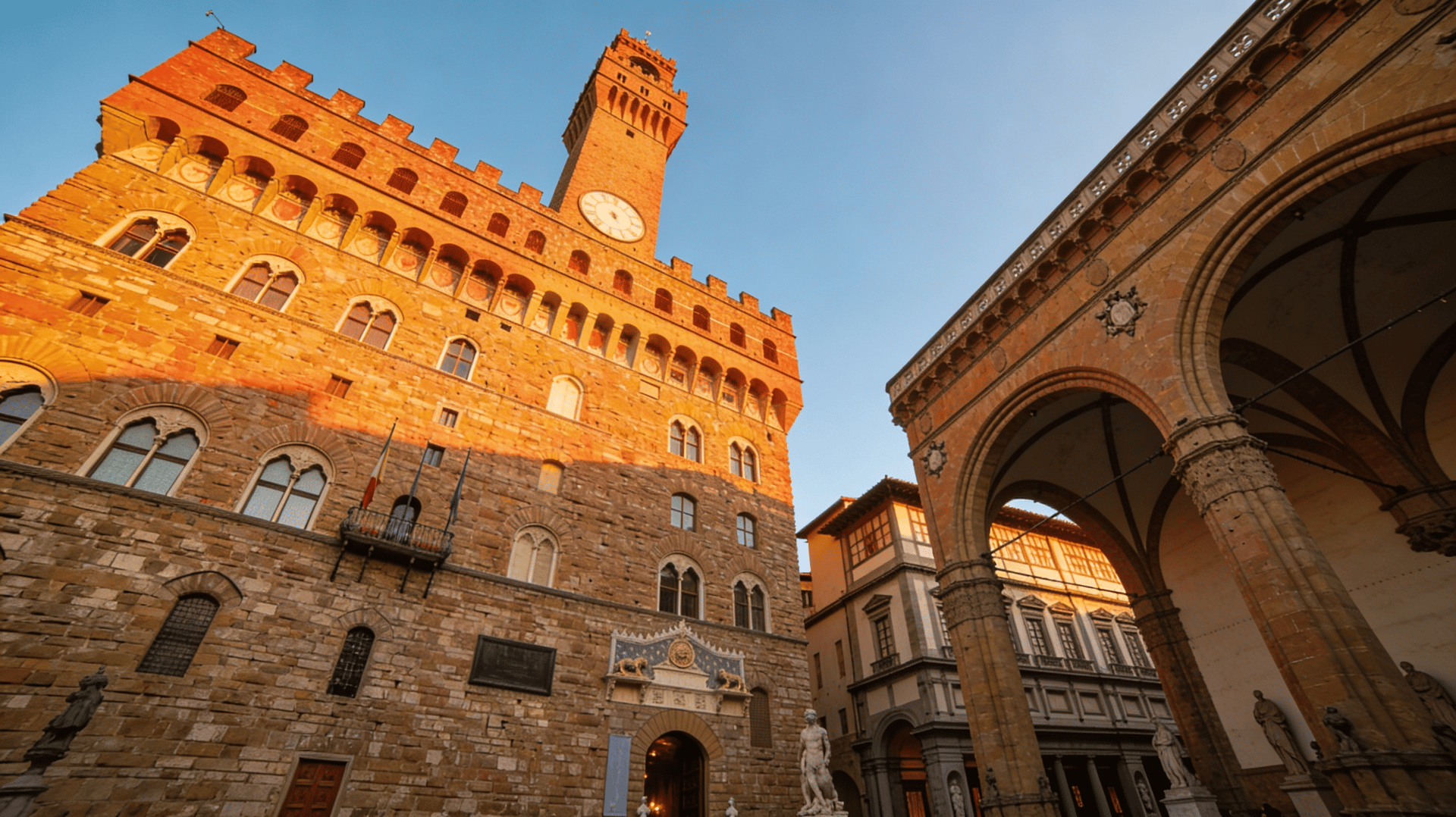
To look upon the silhouette of is to see the architectural transition of Florence itself. With its rusticated stonework, defensive battlements, and the soaring Arnolfo Tower, the palace is a masterclass in civic engineering. Built in 1299 based on an original design attributed to Arnolfo di Cambio, with construction beginning under his direction, the building is a mix of Romanesque, Gothic, and later Renaissance styles. It was designed to be a secure and defensible seat for the Florentine government during turbulent times, serving as the official seat and town hall of Florence. Palazzo Vecchio was originally called the Palazzo della Signoria, named after the ruling body of the Republic of Florence, and has been known by several names throughout its history, including Palazzo del Popolo and Palazzo Ducale. Its significance in Florentine history is reflected in its evolving architecture and enduring role as a symbol of civic authority.
Whether you are an architect, a student of history, or a curious traveler, understanding the structural evolution of this “Old Palace” is vital. Every stone, from the Roman theater ruins in the foundations to the gilded ceilings of the Salone dei Cinquecento, tells a story of power, survival, and aesthetic triumph. Archaeological remains, including the ancient Roman theater of Florentia, have been found beneath the palace. The building's golden age coincided with the Medici era, when the Medici family chose it as their residence.
From Fortress to Palace: The Evolution of Style
The architecture of the palace was not born in a single era. Instead, it is a living timeline of Italian design, featuring a unique blend of Romanesque, Gothic, and Renaissance styles. Over the centuries, Palazzo Vecchio has undergone several modifications and expansions, reflecting its evolving roles in Florentine governance. The influence of Renaissance styles, especially during the 16th century under Giorgio Vasari, is evident in many of its features. During the Medici era, the building was transformed into a medici palazzo, serving as a powerful symbol of Medici authority and political significance in Florence.
1. The Medieval Fortress (1299–1314)
Designed by Arnolfo di Cambio, the original structure was built for defense. Florence in the 13th century was a place of constant civil unrest.
Rustication: The exterior is covered in heavy, rough-hewn “pietra forte” stones, forming solid rusticated stonework. The façade features two rows of two-lighted Gothic windows, each adorned with a trefoil arch and small arches, contributing to the building’s distinctive Gothic style.
Ghibelline Merlons: The swallow-tail battlements at the top of the palace are classic examples of medieval military architecture, providing cover for archers defending the seat of government.
The main tower, Torre della Catena, was completed in the early 14th century and was used as a prison.
Palazzo Vecchio was built on the ruins of earlier structures, including the Palazzo dei Fanti and the Palazzo dell'Esecutore di Giustizia.
2. The Renaissance Transformation (1540–1560)
When the Medici Family moved into the palace, the interior architecture had to change. Key figures such as Cosimo I, Cosimo I de Medici, and Duke Cosimo played a central role in the Renaissance transformation of the palace. Under the direction of architect Giorgio Vasari, the stern, communal spaces were redesigned into grand, interconnected apartments.
The Hall of the Five Hundred: This is an architectural marvel of its time. To create such a massive, pillar-less space, Vasari had to raise the original ceiling by 7 meters, using a complex system of wooden trusses to support the weight. The Salone dei Cinquecento was enlarged by architect Giorgio Vasari to accommodate the court of Grand Duke Cosimo I, showcasing the power of the Medici.
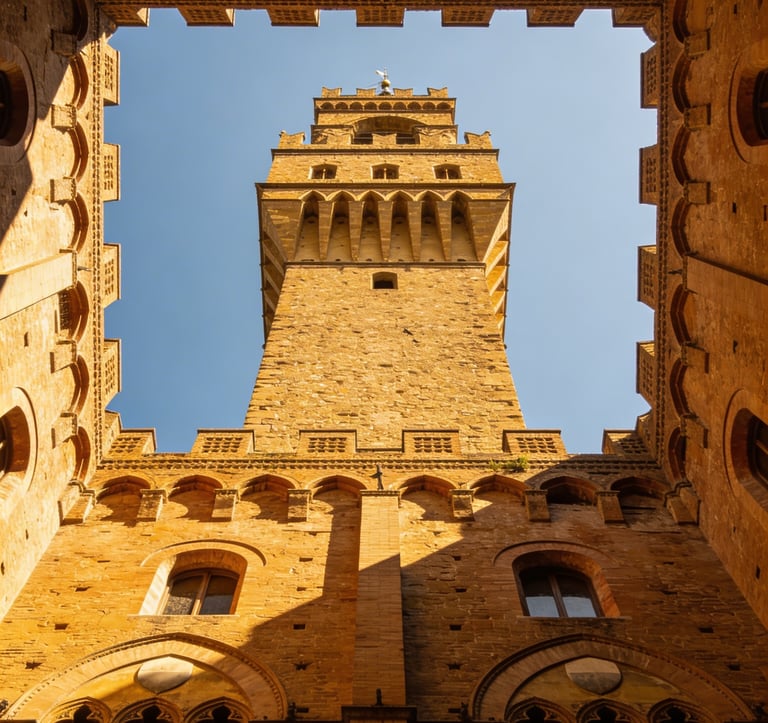
The Michelozzo Courtyard: As you enter with your , you are greeted by an elegant courtyard that balances the heavy exterior with light, ornate columns and refined Renaissance proportions. Cosimo I de' Medici moved his official residence from Palazzo Vecchio to Palazzo Pitti in 1540, and after the de Medici moved, the palace was renamed Palazzo Vecchio.
Iconic Architectural Elements
When you begin your visit to Palazzo Vecchio, keep an eye out for these specific structural highlights:
Arnolfo’s Tower: Standing 94 meters tall, the tower is technically “off-center.” This is because it was built atop the pre-existing Vacca Tower. The engineering required to balance the weight of the new stone tower on an old foundation was revolutionary for the year 1310.
The Salone dei Cinquecento: This is the largest and most imposing chamber in the Palazzo Vecchio and is often included in guided tours. The ceiling consists of 39 ceiling panels constructed and painted by Giorgio Vasari and his assistants. The walls are adorned with large frescoes depicting battles and military victories by Florence over Pisa and Siena.
Nine Painted Coats of Arms and Painted Coats: The facade and interior of Palazzo Vecchio feature nine painted coats of arms and other painted coats, which serve as important artistic and civic symbols, reflecting the building's historical and visual storytelling.
Hercules and Cacus, and Andrea del Verrocchio: At the entrance, you’ll find the sculptures of Hercules and Cacus, symbolizing mythological strength and Florence’s political symbolism. In the first courtyard, look for the Putto with Dolphin by Andrea del Verrocchio, a signature work of Florentine Renaissance art.
Loggia dei Lanzi: Adjacent to Palazzo Vecchio in Piazza della Signoria, the Loggia dei Lanzi serves as an open-air sculpture gallery, showcasing notable sculptures and connecting the palace to the vibrant public square.
The Map Room: Discover the map room, a secret space within the palace containing historical maps, such as the map of Armenia. This room is also connected to private or escape passages used by the Medici family and features elaborate ceiling panels as part of its decorative scheme.
The Secret Passages: The palace architecture includes a “hidden” layer. These narrow stairways and concealed doors were built into the thickness of the walls, allowing the Medici to move between floors without crossing public halls.
The Vasari Corridor: Though it starts at the palace, this elevated enclosed walkway is a feat of urban architecture, spanning the Arno River to connect the government hub with the private Pitti Palace.
Archaeological Excavations: Uncovering the Layers Beneath
Beneath the grand halls and fortified walls of Palazzo Vecchio lies a hidden world that tells the story of Florence’s evolution from Roman outpost to Renaissance powerhouse. The archaeological excavations under the Palazzo della Signoria have revealed a remarkable tapestry of history, where ancient foundations and medieval ambition intersect.
At the heart of these discoveries is the Roman Theater of Florentia, a monumental structure dating back to the 1st century AD. Once capable of seating up to 10,000 spectators, this theater was a symbol of the city’s early prosperity and cultural vitality. Its remains, now accessible to visitors, offer a rare glimpse into the urban fabric of ancient Florence—a city already marked by grandeur long before the rise of the Medici family.
As centuries passed and the Roman Empire faded, the site was transformed. Medieval Florence rose atop these ancient stones, and the area became home to important civic buildings such as the Palazzo dei Fanti and the Palazzo dell’Esecutore di Giustizia. The excavations have unearthed remnants of these structures, shedding light on the daily life and governance of the Florentine Republic during the Middle Ages. Traces of the ancient Via dei Leoni, a Roman road that once connected the city to the countryside, further illustrate the site’s enduring role as a crossroads of power and commerce.
When Arnolfo di Cambio was commissioned to design the Palazzo Vecchio in the late 13th century, he ingeniously incorporated these layers of history into his vision. The palace’s robust, rusticated stonework and gothic style echo the solidity of the Roman foundations, while the asymmetrical placement of the iconic tower—built atop the ancient theater’s remains—speaks to the architectural challenges and innovations of the era. This seamless blending of old and new is a hallmark of Florentine architecture, later echoed in landmarks like the Pitti Palace and the Uffizi Gallery.
Today, the archaeological site beneath Palazzo Vecchio is open to the public, offering an immersive journey through time. Visitors can walk among the ancient stones, explore the vestiges of the Roman theater, and imagine the bustling life of medieval Florence. For scholars, these excavations provide invaluable insights into the architectural evolution of the palace and its pivotal role during the Italian Renaissance, when the Medici family transformed Florence into a beacon of art, culture, and political power.
The story uncovered beneath Palazzo Vecchio is not just one of bricks and mortar, but of a city continually reinventing itself—layer by layer, dynasty by dynasty. It stands as a testament to the enduring influence of the Medici, the ingenuity of architects like Arnolfo di Cambio, and the timeless allure of Florence’s historic centre.
Planning Your Architectural Tour
To fully appreciate the structural genius of the site, we recommend a strategic approach to your Palazzo Vecchio museum experience:
Start in the Basement: Use combined tickets to access the archaeological excavations. Seeing the Roman theater foundations helps you understand the solid ground upon which the medieval fortress was raised. As you move up, enter the first courtyard, designed by Michelozzo in 1453, featuring a porphyry fountain with a Putto holding a Dolphin. The courtyard is adorned with grotesque decorations and richly decorated stuccoes. The frescoes here were painted by Giorgio Vasari for the wedding celebration of Francesco I de' Medici to Archduchess Johanna of Austria.
Explore the Courtyards: Continue to the second courtyard, accessible via Vasari's staircase, which connects important spaces like the Salone dei Cinquecento and showcases significant architectural features. Don't miss the third courtyard, centrally located and notable for its sculptures and its role in connecting different parts of the palace.
Climb for Perspective: Secure Arnolfo Tower tickets to see the defensive battlements up close. From the top, you can study the city’s urban plan and see how the palace sits in relation to the Duomo.
Ascend to the Second Floor: Visit the second floor, home to the Apartments of the Elements and the Sala dei Gigli. The staircase connecting the first and second floors is itself a notable architectural feature. In the Room of the Elements, look for allegorical frescoes representing Water, Fire, and Earth.
Appreciate Decorative Details: Throughout the palace, observe the inlaid woodwork (intarsia) on the doors, including portraits of Dante and Petrarch, which showcase the craftsmanship and artistic significance of the period.
Study the Salone: Spend time looking up in the Hall of the Five Hundred. The ceiling is a masterpiece of 16th-century structural engineering, holding dozens of massive painted panels without the need for central support columns.
Essential 2026 Visitor Tips for Design Lovers
Photography Rules: While flash is prohibited to protect the frescoes, you are encouraged to take photos of the architecture. The play of light in the courtyards and the geometric views from the tower are world-class.
Accessibility Note: Because it is a medieval monument, some of the most interesting architectural features (like the tower and the secret passages) involve narrow, steep climbs. Consult our visitor information page for details on elevator access to the main museum floors.
Cashless Entry: Don't forget that the museum is now a cashless facility. This applies to the specialized Palazzo Vecchio guided tours that focus specifically on the building's art and architecture.
Frequently Asked Questions (FAQ)
What style of architecture is Palazzo Vecchio? It is primarily a Gothic-style fortress (the exterior) with a High Renaissance interior. It is often cited as the pinnacle of Tuscan civic architecture.
How was the tower built so high without falling? Arnolfo di Cambio used a tapered design and lightweight materials for the very top sections, ensuring the center of gravity remained stable over the old stone foundations.
Are the Roman ruins beneath the palace worth seeing? Absolutely. If you are interested in the architecture of the city, seeing the Roman theater remains gives you a rare look at the 1st-century AD foundations of Florence.
Did Palazzo Vecchio serve any important roles in modern history? Yes, Palazzo Vecchio served as the seat of the provisional government of united Italy from 1865 to 1871, when Florence was the temporary capital.
What is the Studiolo of Francesco I? The Studiolo of Francesco I is a small secret study designed by Vasari in a manneristic style for Francesco I de' Medici. It is renowned for its hidden doors and intricate decoration, reflecting the interests of Francesco I and the influence of Francis I on Renaissance art and architecture.
What can visitors see in the Chapel of Eleonora? The Chapel of Eleonora, painted in fresco by Angelo Bronzino, features masterpieces such as the Crossing the Red Sea and a depiction of the Holy Trinity, showcasing the religious and artistic significance of the space.
Are there secret passages in Palazzo Vecchio? Yes, visitors can experience secret passages within Palazzo Vecchio that were originally built for the Medici family, including hidden routes connected to the Studiolo of Francesco I and other private spaces.
Experience the Power of Stone
The architecture of the palace is the silent witness to seven centuries of Florentine drama. It is a building that has survived sieges, flood, and political upheaval, remaining as solid today as it was in the 1300s.
Ready to explore the fortress? Head to our home page to book your or explore our guided tours to learn the secrets of how this masterpiece was built. Would you like me to find a map showing the architectural layout of the different floors to help you plan your walk?
Where power met beauty. Make Palazzo Vecchio the highlight of your Florentine journey.

100% Secure Booking - Official 2026 Ticket Links | 233 Steps to the View - Climb the iconic Arnolfo Tower | 725 Years of History - From Medieval Fortress to Ducal Palace
© PalazzoVecchioFlorence.com 2026 - All rights reserved. Privacy Policy. Affiliate disclosure.
This is not an official website. This is independent ticket reseller site is offering links to official authorized ticket resellers and might earn commission on tickets.