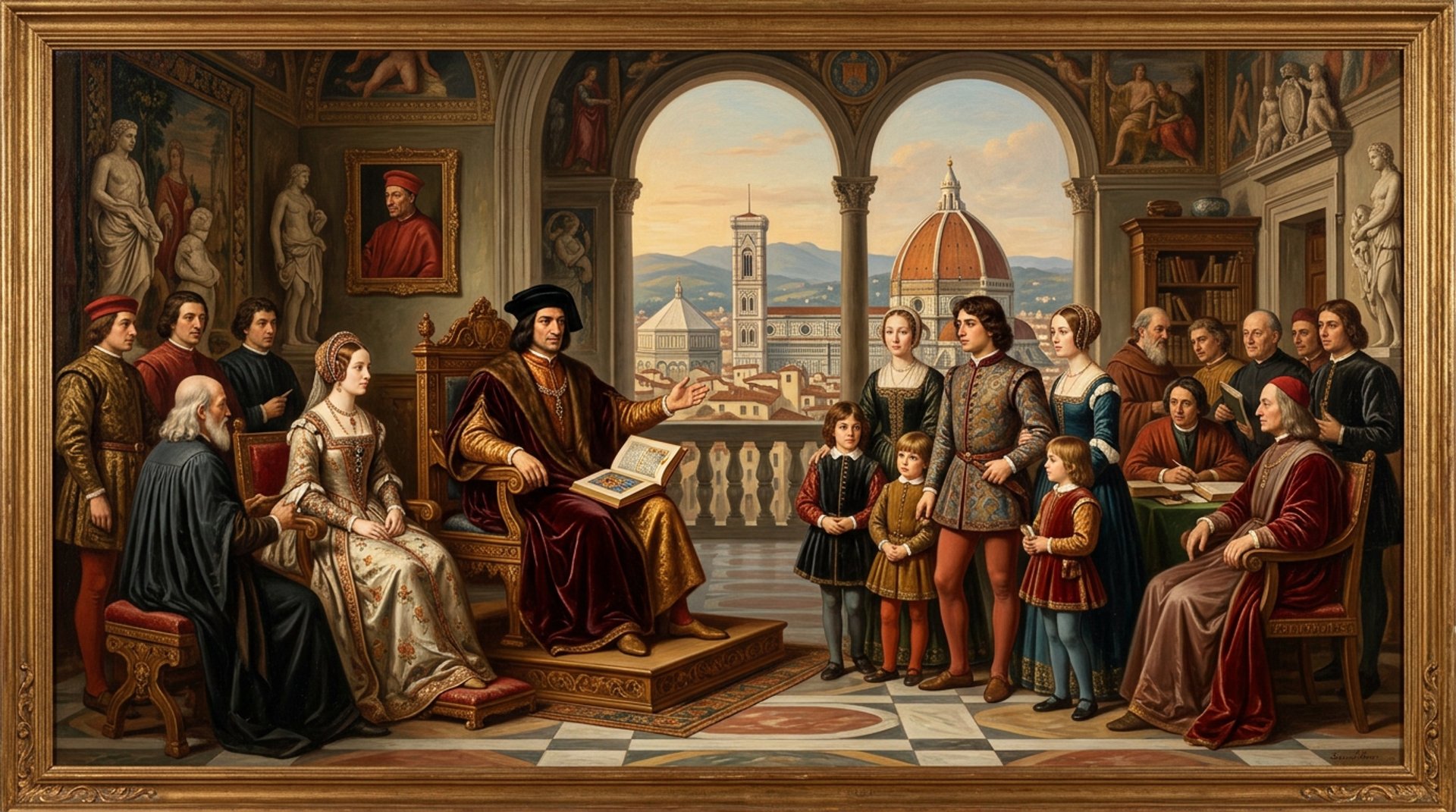
MEDICI FAMILY
The Medici Family and Palazzo Vecchio: A Dynasty of Power and Art
To step into Palazzo Vecchio is to walk in the shadows of the most influential family in Western history. For over three centuries, the Medici Family transformed Florence from a medieval commune into the cradle of the Renaissance. While they owned many villas and palaces, it was here, within the rugged stone walls of the "Old Palace," that they cemented their political legitimacy and displayed their staggering wealth to the world.
Understanding the Medici is the key to unlocking the symbolism hidden within the museum's frescoes and secret chambers. From the strategic brilliance of Cosimo the Elder to the grand vision of Grand Duke Cosimo I, this family didn't just live in Florence—they authored its golden age.
The Rise of the Medici: From Bankers to Dukes
The Medici Family began their ascent not as royals, but as shrewd bankers. By founding the Medici Bank, they became the wealthiest family in Europe, eventually using their financial leverage to influence Florentine politics behind the scenes.
Cosimo the Elder: The primary architect of the family's "silent" rule, Cosimo was a master of political maneuvering. Though he was briefly imprisoned in the Arnolfo Tower, he returned from exile to lead Florence into a period of unprecedented stability.
Lorenzo the Magnificent: Perhaps the most famous of the dynasty, Lorenzo was a poet, a diplomat, and the ultimate patron of the arts. Under his protection, artists like Botticelli and Michelangelo thrived, though Lorenzo himself continued to live in the more modest Medici Palace on Via Larga.
Cosimo I de' Medici: The man responsible for the Palazzo Vecchio we see today. In 1540, Cosimo I moved the ducal residence to the palace, tasking Giorgio Vasari with transforming the austere government building into a lavish palace fit for a Grand Duke of Tuscany.
Traces of the Medici Inside Palazzo Vecchio
When you purchase your Palazzo Vecchio tickets, you are essentially entering a private family gallery designed to glorify the Medici name.
The Salone dei Cinquecento: A Propaganda Masterpiece
The massive frescoes in the Hall of the Five Hundred were commissioned by Cosimo I. If you look closely at the ceiling and wall panels, you will see the Medici Family depicted as god-like figures, successful in battle and favored by the heavens.
The Apartments of Leo X and Clement VII
Two members of the family reached the highest office in Christendom: the Papacy. The rooms dedicated to these Medici Popes are filled with intricate decorations that celebrate the union of the family’s temporal power in Florence with their spiritual power in Rome.
The Secret Passages and the Studiolo
The Medici were famously paranoid, and for good reason—Florence was a hotbed of conspiracy. The Secret Passages tour allows you to see the hidden doors through which the dukes moved to avoid public sight. You will also visit the Studiolo of Francesco I, a windowless, jewel-box of a room where the Duke practiced alchemy and stored his most precious treasures.
The Women of the Medici: Eleonora of Toledo
While the men handled the wars and the banking, the women of the Medici Family were instrumental in shaping the culture of the court. Eleonora of Toledo, the wife of Cosimo I, was a powerhouse in her own right.
Her private apartments in the palace are among the most beautiful. The Chapel of Eleonora, painted by Bronzino, serves as a testament to her piety and her Spanish heritage. It was Eleonora who actually purchased the Pitti Palace, providing the family with the sprawling gardens and grand residence that would eventually become their primary home.
Planning Your "Medici-Themed" Visit
To truly appreciate the family's legacy, we recommend a targeted approach to your visit to Palazzo Vecchio:
Focus on the Quarters: Dedicate extra time to the "Quarters of the Elements" and the "Quarters of Leo X" to see how the family utilized classical mythology to represent their own history.
Guided Expertise: Because the symbolism is so dense, a Palazzo Vecchio guided tour is the best way to have the "Medici code" decoded for you by a professional historian.
Combined Perspective: Use combined tickets to see the Roman ruins (where the Medici's predecessors once walked) and climb the tower where the family’s enemies were once held captive.
2026 Visitor Tips for History Lovers
The Medici Route: Many visitors combine a trip to the palace with a walk through the Vasari Corridor (check current 2026 reopening status for sections) which connects Palazzo Vecchio to the Pitti Palace.
Cashless Logistics: Remember that the museum is a cashless facility. This applies to the gift shop, where you can find excellent biographies and art books on the Medici Family.
Advance Booking: To see the most intimate Medici spaces, like the Secret Passages, you must book well in advance. Check our home page for real-time availability of these exclusive time slots.
Frequently Asked Questions (FAQ)
Did the Medici family build Palazzo Vecchio?
No, the palace was already a century old when they moved in. However, they are responsible for the entire interior renovation and the luxurious decorations that turned it from a fortress into a palace, a true marvel of architecture.
Where is the Medici family buried?
While they lived in Palazzo Vecchio, their final resting place is in the Medici Chapels at the Basilica of San Lorenzo, a short walk from Piazza della Signoria.
Can I see the Medici crest in the palace?
Yes, the famous "palle" (balls) of the Medici crest are visible everywhere—on ceilings, floors, and even in the frescoes of the Hall of the Five Hundred.
Follow the Medici Footsteps
The story of the Medici Family is the story of Florence itself. By exploring the rooms where they governed, celebrated, and hid, you gain a deep, personal connection to the Renaissance.
Ready to discover the secrets of the dynasty? Browse our Tickets page to find the best entry times, or visit our Visitor Information section for a map of the Medici apartments. Would you like me to recommend a "Medici Walking Map" that takes you from the palace to their other famous residences in the city?
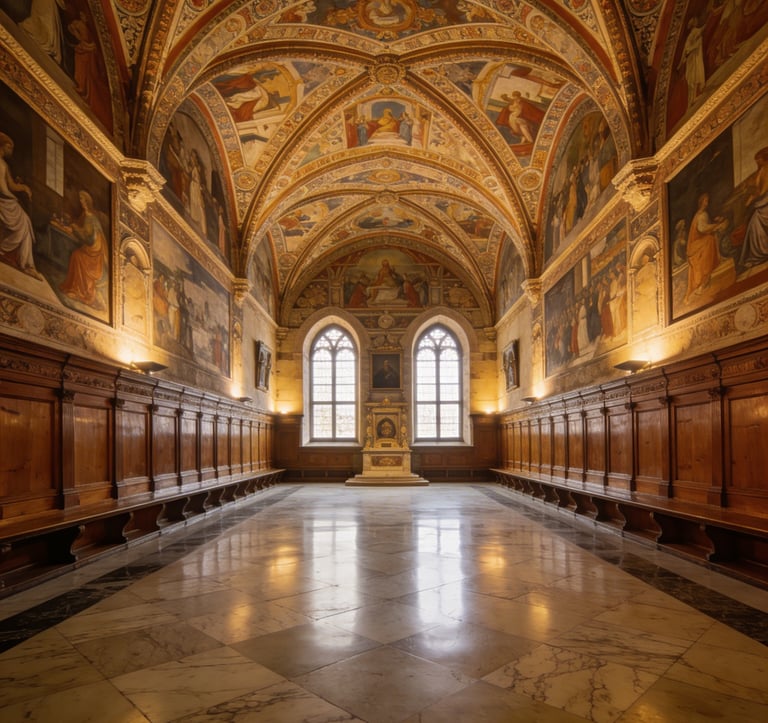
Walk the halls where the Medici ruled. Step into the heart of the Renaissance.

100% Secure Booking - Official 2026 Ticket Links | 233 Steps to the View - Climb the iconic Arnolfo Tower | 725 Years of History - From Medieval Fortress to Ducal Palace
© PalazzoVecchioFlorence.com 2026 - All rights reserved. Privacy Policy. Affiliate disclosure.
This is not an official website. This is independent ticket reseller site is offering links to official authorized ticket resellers and might earn commission on tickets.