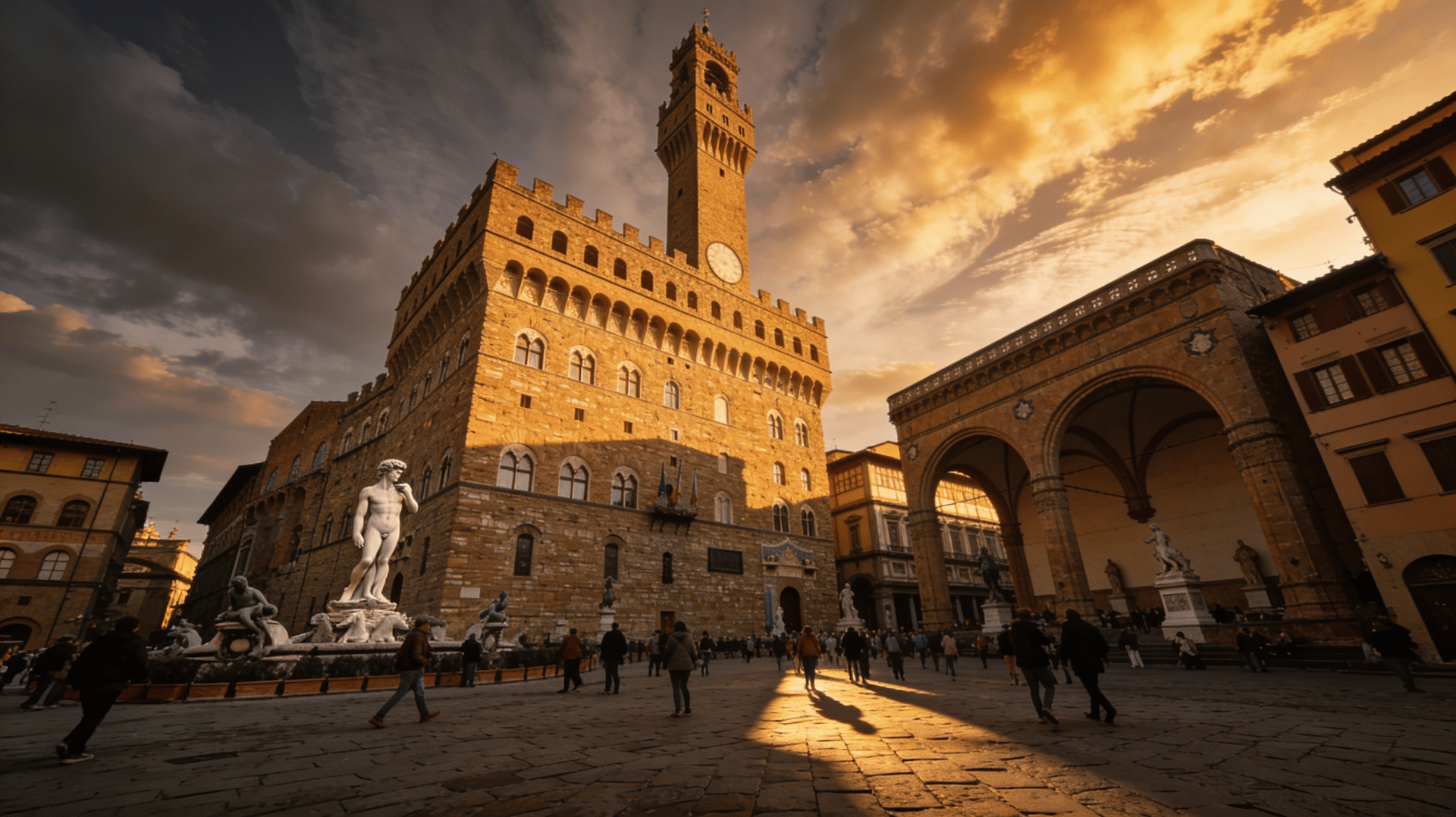
PALAZZO VECCHIO
Seven centuries of secrets, one golden ticket. Discover the mysteries of Palazzo Vecchio. Independent guide.
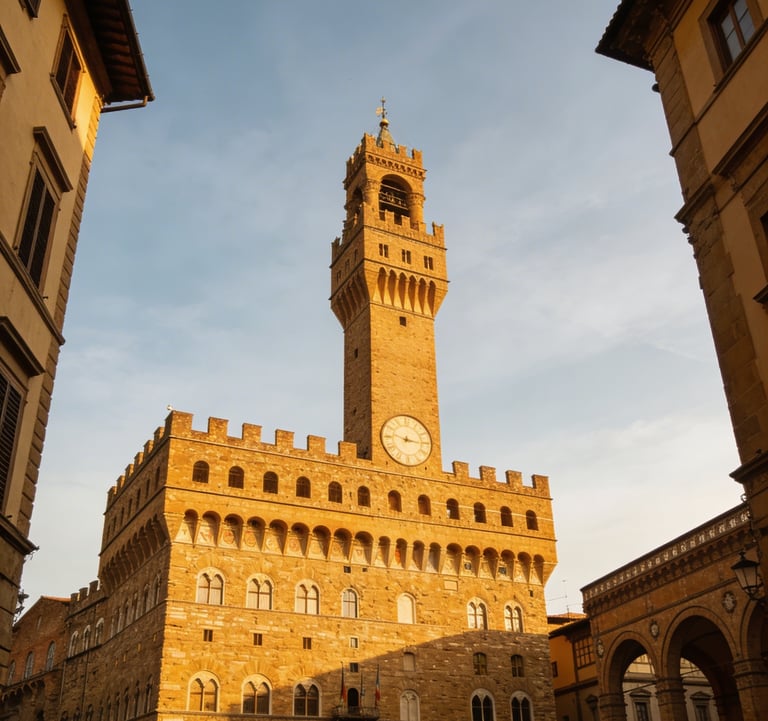
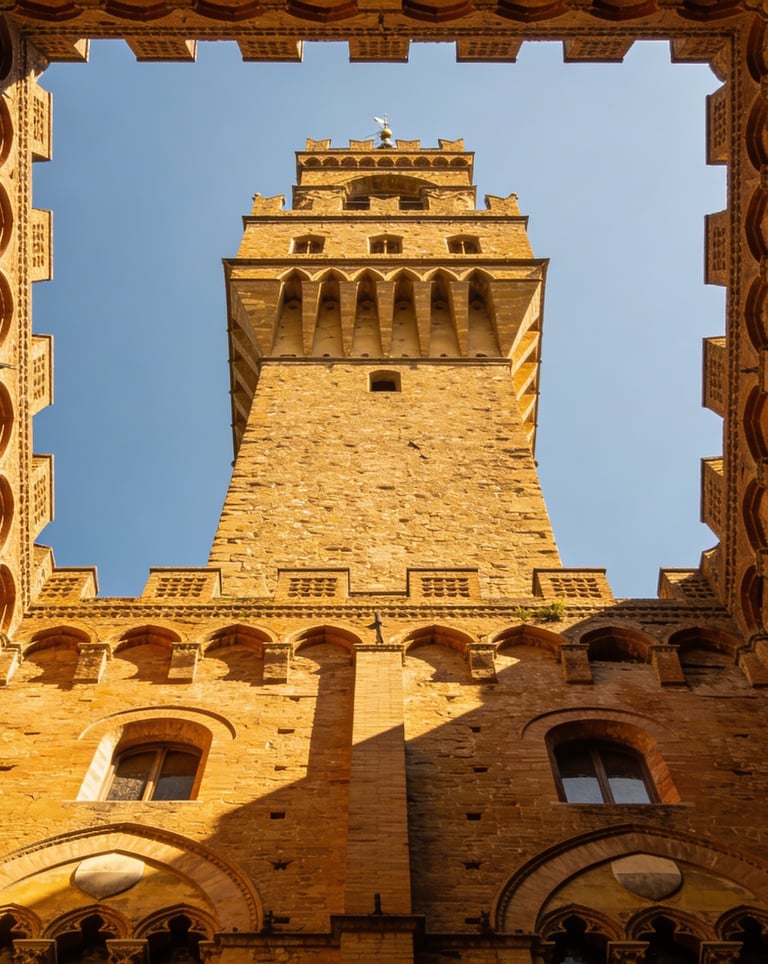
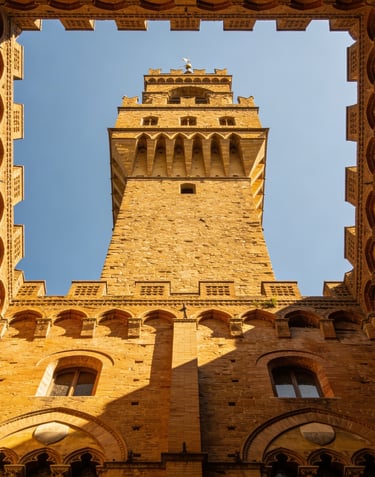
233 steps to the best view in Florence. Are you ready for the Arnolfo Tower?
It's no coincidence that Florence is one of the top destinations for the Instagram nation. The breathtaking culture, the endless choices of Italian cuisine, art combined with architecture and friendly locals make the city a place for everyone.
This is independent Florence guide and ticket reseller site, offering links to official authorized ticket resellers. We might earn commission sales, with no extra cost to you.This is not an official website of the palazzo.
Experience the Heart of Florence: Palazzo Vecchio Visitor Guide
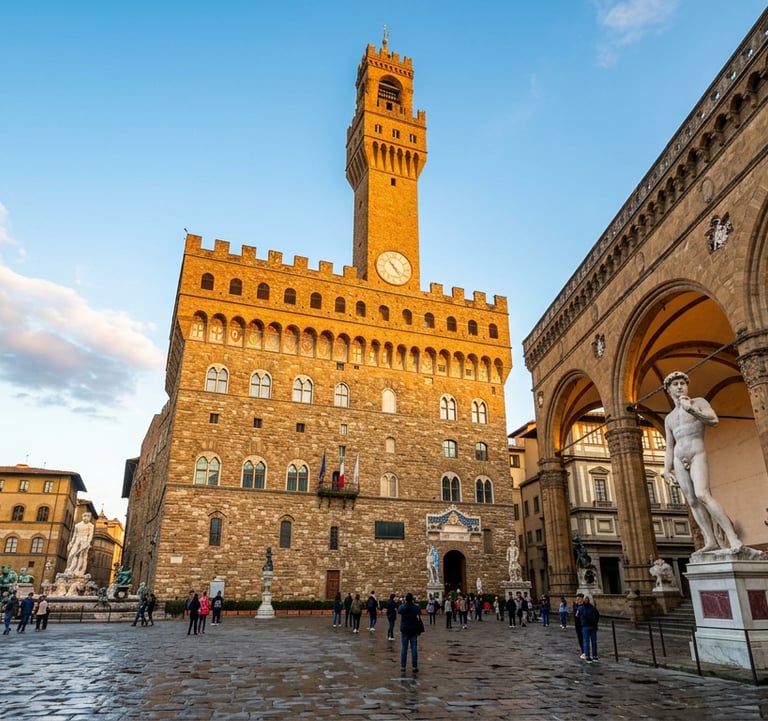
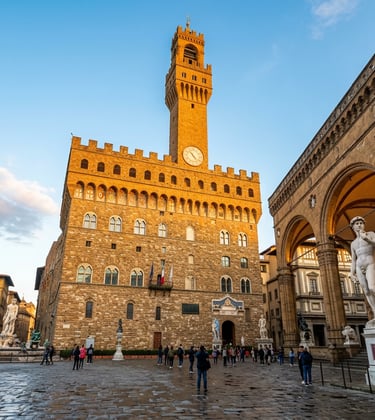
Dominating the iconic Piazza della Signoria, Palazzo Vecchio, also known as the Old Palace and originally called Palazzo della Signoria—is the historic soul of Florentine politics and a breathtaking masterpiece of Renaissance art. Its artistic and historical value is immense, as it serves as a microcosm where art and history have been indissolubly bound for centuries. Once the residence of the Medici family and currently serving as Florence’s City Hall, this fortress-like palace, with its massive pillars and imposing exterior, is an essential stop for anyone wanting to understand the true power and beauty of the Italian Renaissance.
Construction of Palazzo Vecchio began in 1299 under the architect Arnolfo di Cambio, on the ruins of the Palazzo dei Fanti and the Palazzo dell'Esecutore di Giustizia. The architectural style is a unique mix of Romanesque, Gothic, and Renaissance elements. From the massive frescoes of the Hall of the Five Hundred to the towering heights of Arnolfo’s Tower, and through several rooms each with unique artistic and historical value, visiting is a journey through centuries of intrigue, art, and architectural genius. Because this remains a functioning government building and one of Florence’s most popular sites, planning your visit in advance is the key to a smooth experience.
Architecture and Layout of Palazzo Vecchio
Standing proudly in the heart of Florence’s Piazza della Signoria, Palazzo Vecchio is more than just a historic building—it is a living testament to the city’s turbulent past and artistic triumphs. To visit Palazzo Vecchio is to walk through over seven centuries of Florentine history, where every stone and fresco tells a story of power, ambition, and creativity.
The origins of this iconic palace trace back to the late 13th century, when the renowned architect Arnolfo di Cambio was commissioned to design a new seat of government for the Florentine Republic. Rising from the ruins of the Palazzo dell’Esecutore di Giustizia and the Palazzo dei Fanti, the new structure symbolized the city’s resilience and the assertion of civil power over feuding factions. Its fortress-like exterior, with massive rusticated stone walls and crenellated battlements, was designed to project strength and stability at a time when Florence’s political future was anything but certain.
One of the most striking features of the building is Arnolfo’s Tower, soaring 94 meters above the square. This imposing tower not only dominates the Florence skyline but also offers visitors breathtaking panoramic views of the city, from the red-tiled roofs to the distant hills. The tower’s presence is a constant reminder of the palace’s dual role as both a defensive stronghold and a symbol of civic pride.
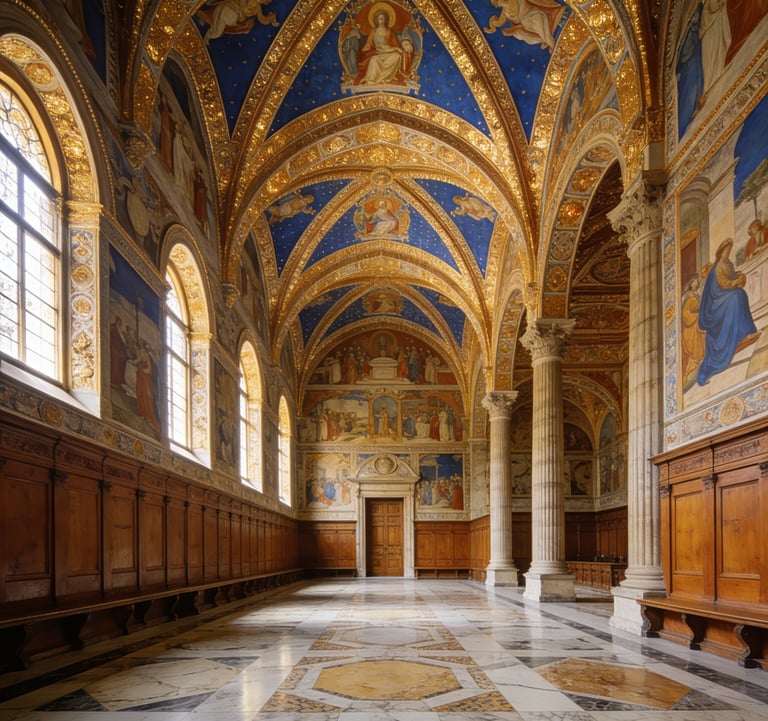
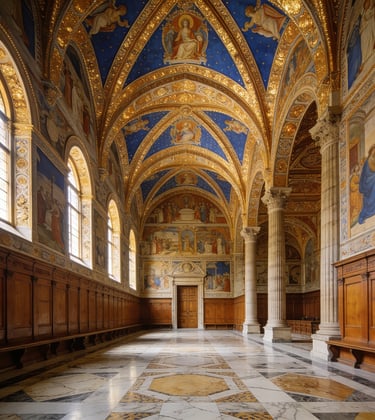
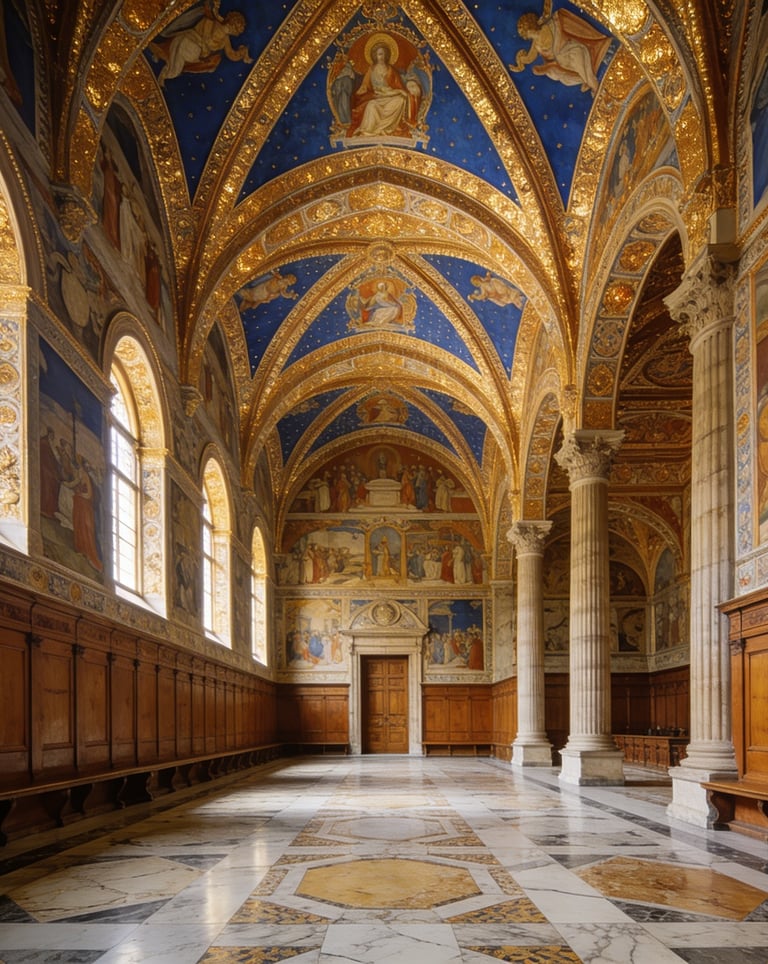
Inside, the palace unfolds in a series of grand halls and intimate chambers, each magnificently decorated to reflect the tastes and ambitions of its illustrious occupants. The Salone dei Cinquecento, or Hall of the Five Hundred, is the crown jewel of the first floor—a vast space originally built to host the meetings of the city’s council. Its soaring ceilings and monumental frescoes by Giorgio Vasari celebrate Florence’s military victories and the glory of the Medici family, while sculptures and gilded details add to the sense of awe.
The palace’s residential quarters, including the Apartments of Eleonora, offer a more personal glimpse into the lives of the Medici dynasty. These rooms are adorned with exquisite frescoes, tapestries, and period furnishings, showcasing the refined taste of Eleonora of Toledo, wife of Cosimo I de’ Medici. Highlights include the Green Room, once Eleonora’s private bedchamber, and the Map Room, where walls are lined with beautifully painted geographical maps—a testament to the Renaissance spirit of exploration and discovery.
Beyond the public halls and private apartments, Palazzo Vecchio harbors a network of secret passages and hidden stairways. These mysterious corridors, some designed by Vasari himself, allowed the Medici to move discreetly between the palace, the Uffizi Gallery, and even as far as Palazzo Pitti. Today, visitors can uncover these secrets on a guided tour, gaining rare insight into the intrigue and strategy that shaped Florence’s destiny.
Throughout its long history, Palazzo Vecchio has adapted to the changing needs of the city. Once the seat of the Florentine Republic, later the ducal residence of Cosimo I, and now the official town hall and home to the City Council, the palace remains at the heart of Florence’s civic life. The Palazzo Vecchio Museum, housed within its walls, invites visitors to explore its artistic and historical treasures, from the archaeological ruins beneath the first courtyard to the lavishly decorated rooms above.
Whether you are drawn by the allure of Renaissance art, the thrill of secret passages, or the sheer grandeur of its architecture, Palazzo Vecchio promises an unforgettable journey through the ages. Its enduring presence in Piazza della Signoria stands as a powerful symbol of Florence’s legacy as the cradle of the Italian Renaissance—a place where history, art, and civic pride converge in one extraordinary building.
Securing Your Palazzo Vecchio Tickets
To maintain the integrity of the museum and ensure a high-quality visitor experience, entry is managed through timed slots. Especially during the busy summer months, demand for Palazzo Vecchio tickets can be high, often selling out days in advance.
Book Online to Skip the Line: Purchasing your Palazzo Vecchio tickets online is highly recommended. Pre-booked tickets allow you to bypass the often-lengthy queues at the ticket office, giving you more time to explore the museum.
Cashless Entry: Note that as of 2026, many of Florence's civic museums, including Palazzo Vecchio, have transitioned to predominantly cashless payment systems at the gate. Always have a credit or debit card ready for on-site purchases.
Updated 2026 Pricing: Starting February 2026, standard adult museum tickets are €18. If you wish to climb the Arnolfo Tower, separate tickets or a combined pass are required.
Reduced Rates and Free Entry: Reduced pricing is typically available for EU citizens aged 18–25. Residents of the Metropolitan City of Florence often enjoy free entry on the first Sunday of every month (Domenica Metropolitana).
Identity Verification: If you have booked a reduced or free ticket, you must present a valid ID or passport at the entrance.
Must-See Highlights Inside Palazzo Vecchio
Your Palazzo Vecchio experience includes access to some of the most decorated rooms in the world. Key highlights include:
Salone dei Cinquecento (Hall of the Five Hundred): Built in 1494 by Simone del Pollaiolo on commission from Girolamo Savonarola, this is the largest and most imposing chamber in the palace, measuring approximately 54 meters long and 23 meters wide. The hall was later enlarged by Giorgio Vasari for Grand Duke Cosimo I. Its ceiling consists of 39 panels painted by Vasari and his assistants, depicting allegorical and historical scenes, while the walls feature frescoes of battles and military victories by Florence over Pisa and Siena. The hall contains sculptures by de Rossi, including the statue of Leo X, and Michelangelo’s “Genius of Victory,” originally intended for the tomb of Julius II. Michelangelo’s David was also historically placed at the entrance of Palazzo Vecchio, and a replica stands there today.
Audience Chamber: A historically significant and richly decorated room, used for formal meetings, justice, and official functions, reflecting the civic and political importance of the palace.
Arnolfo’s Tower: Standing 94 meters tall, the climb offers one of the most famous panoramic views of Florence, including a perfect bird’s-eye view of the Duomo.
The Secret Passages: For a truly unique experience, you can book a specialized tour of the hidden stairways and “secret” rooms used by the Medici to move through the palace undetected.
The Hall of Geographical Maps: A stunning room lined with 53 hand-painted maps of the known world in the 16th century, showcasing the Renaissance’s scientific curiosity.
The Private Apartments: Explore the beautifully adorned rooms of Eleonora of Toledo and the Apartments of the Elements on the second floor, which offer a glimpse into the daily life of the Medici dukes. The ceiling of the Room of the Elements features allegorical frescoes representing Water, Fire, and Earth. Don’t miss the Studiolo of Francesco I, a small secret private study designed by Vasari in a manneristic style for Francesco I de’ Medici. Its walls are filled with paintings representing the four elements—fire, water, earth, and air—and it contains a portrait of Cosimo I and Eleonora of Toledo by Bronzino. The first and second floors of the palace house significant collections and notable rooms, including the Hall of Priors.
Loeser Collection: A highlight of the palace, this curated assemblage of Renaissance and medieval artworks was donated by Charles Loeser and is displayed in the private chambers.
The palace’s art collections showcase the influence of the Tuscan school, with works by prominent Renaissance artists such as Michelangelo.
The Palazzo Vecchio is also home to the Museo dei Ragazzi, which is part of the museum complex and offers educational experiences for younger visitors.
Essential Visitor Information
Location: Palazzo Vecchio is located in Piazza della Signoria, the most important square in Florence. Piazza della Signoria is directly in front of the palace and is home to several notable monuments, including the Fountain of Neptune (known as 'il biancone') and the equestrian statue of Cosimo I, both situated next to Palazzo Vecchio.
Nearby Attractions: The Uffizi Gallery, built by Giorgio Vasari in 1560, is located nearby. Adjacent to Palazzo Vecchio is the Loggia dei Lanzi, an open-air museum showcasing various sculptures. The Loggia della Signoria, another significant cultural site, is also close by. From the square or the tower, you can see Giotto's bell tower, a prominent landmark of Florence.
Opening Hours: The museum is generally open daily from 9:00 AM to 7:00 PM. On Thursdays, the palace typically closes early at 2:00 PM. Always check for holiday-specific hours, as the palace still hosts official civic events.
Entrance Location: The main tourist entrance is located via the “Cortile di Michelozzo” (the first courtyard) in Piazza della Signoria.
Climbing the Tower: Please be aware that children under 6 are not permitted to climb Arnolfo’s Tower for safety reasons, and the climb is not recommended for those with claustrophobia or heart conditions.
Accessibility: The main museum floors are accessible via elevator. However, due to its medieval structure, the Tower and certain archaeological sections have limited accessibility for visitors with mobility issues.
Last Entry: The ticket office closes exactly one hour before the museum’s closing time. Ensure you arrive at least 15 minutes before your booked time slot.
Why Book With Us?
Instant Confirmation: Receive your digital Palazzo Vecchio tickets immediately via email.
Flexibility: Many of our ticket options include free cancellation up to 24 hours before your visit.
Expert Support: Our team is available to help you navigate the best times to visit and how to combine your trip with other Florence icons like the Uffizi Gallery.
Palazzo Vecchio: Frequently Asked Questions
Find quick answers to the most common questions about visiting Florence’s historic seat of power.
Do I need to book Palazzo Vecchio tickets in advance? Yes, pre-booking is highly recommended. As one of Florence's top attractions, time slots for Palazzo Vecchio tickets often sell out, especially during the peak season and on weekends. Booking online ensures you secure your preferred entry time and helps you skip the long ticket office lines.
Is there a "Skip-the-Line" option for Palazzo Vecchio? Absolutely. When you purchase your tickets online, you receive a dedicated time slot. This allows you to bypass the general ticketing queue and head straight to the security check, saving you significant time during busy periods.
How much do Palazzo Vecchio tickets cost in 2026? As of February 2026, a standard adult ticket for the Museum is €18. Reduced tickets (€12) are available for visitors aged 18–25. Access to the requires a separate ticket or a combined pass. Please note that the site is now a cashless facility.
What are the opening hours for the Museum and Tower?
Museum: Friday to Wednesday, 9:00 AM – 7:00 PM; Thursday, 9:00 AM – 2:00 PM.
Arnolfo Tower: Friday to Wednesday, 9:00 AM – 5:00 PM; Thursday, 9:00 AM – 2:00 PM.
Note: Last entry is always one hour before closing.
Are there age restrictions for climbing the Tower? Yes. For safety reasons, children under 6 years old are not permitted to climb the Arnolfo Tower. Visitors under 18 must be accompanied by an adult. The climb involves 233 steps and is not recommended for those with heart conditions or vertigo.
Is Palazzo Vecchio wheelchair accessible? The main floors of the museum are accessible via elevator. However, due to the medieval architecture, the Arnolfo Tower, the Secret Passages, and the Mezzanine level are unfortunately not accessible to wheelchair users or those with significant mobility impairments.
What is the "Secret Passages" tour? This is an exclusive guided experience that takes you through hidden stairways and rooms used by the Medici family. These areas are not accessible with a standard Palazzo Vecchio ticket and must be booked as a specific guided tour.
Can I visit Palazzo Vecchio for free? Free entry is generally granted to visitors under 18 years old. Additionally, on the first Sunday of the month (Domenica Metropolitana), residents of the Metropolitan City of Florence can enter for free with a valid ID.
Join 150,000+ Travelers Who Explored Florence with Us
⭐ 4.9/5 Average Rating – Based on verified visitor reviews.
🏛️ Expert Selection – Only the best-rated guided tours and tickets.
📱 Secure Mobile Entry – Authorized 2026 digital vouchers.
🛡️ 24h Cancellation – Flexibility for your Italian adventure.

100% Secure Booking - Official 2026 Ticket Links | 233 Steps to the View - Climb the iconic Arnolfo Tower | 725 Years of History - From Medieval Fortress to Ducal Palace
© PalazzoVecchioFlorence.com 2026 - All rights reserved. Privacy Policy. Affiliate disclosure.
This is not an official website. This is independent ticket reseller site is offering links to official authorized ticket resellers and might earn commission on tickets.