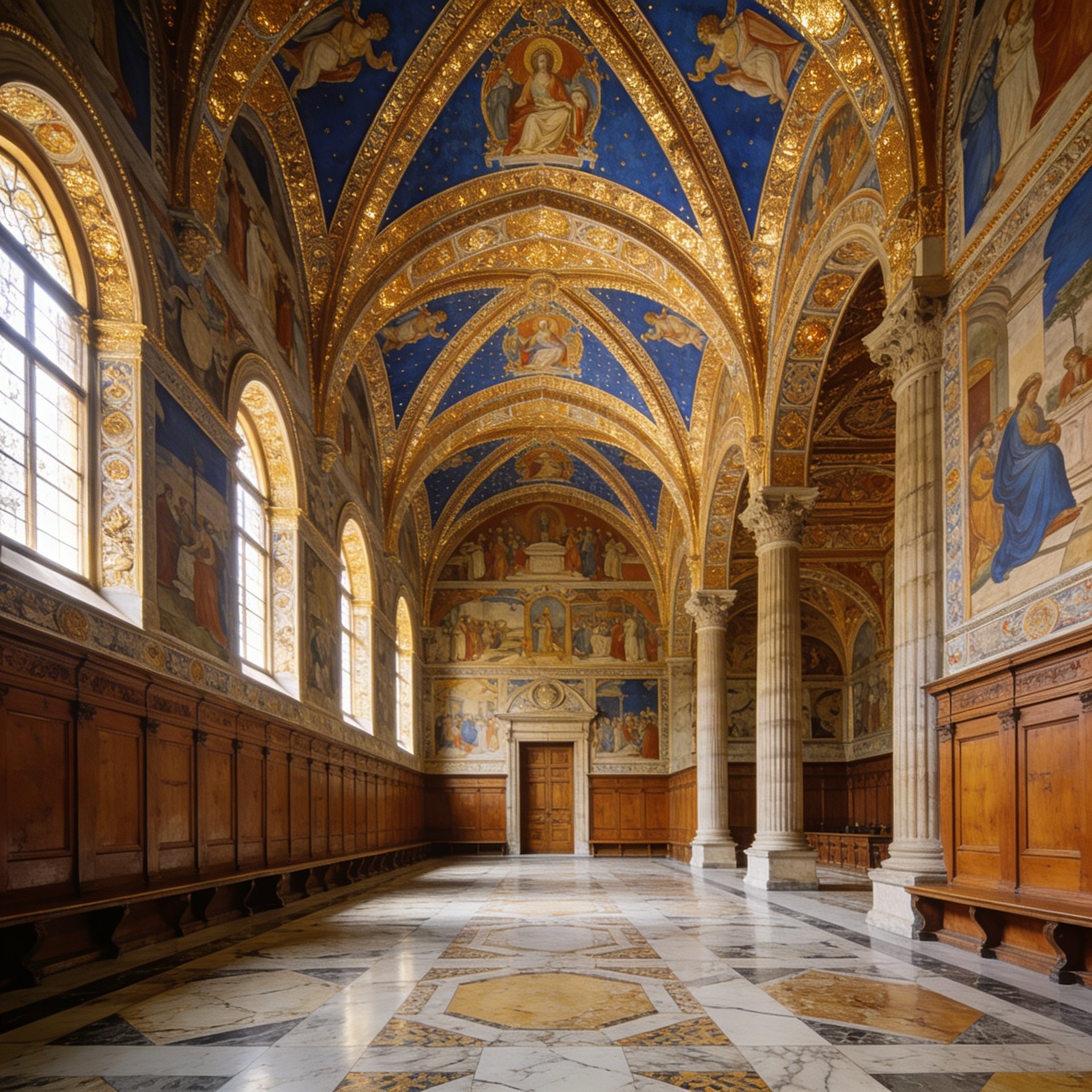
Hall of 500 Palazzo Vecchio: Secrets & Art of Florence
Palazzo Vecchio & Hall of Five Hundred: Guided Tour
Introduction to Palazzo Vecchio
Rising proudly above the bustling heart of Florence, the Palazzo Vecchio stands as a symbol of the city’s enduring spirit and artistic legacy. This formidable fortress-palace, with its crenellated tower and imposing stone façade, has served as Florence’s town hall for more than seven centuries. Once the seat of the Medici family’s power, the Palazzo Vecchio is a treasure trove of history, art, and intrigue. Step inside and you’ll find yourself transported to the Renaissance, wandering through grand halls like the Salone dei Cinquecento, where the echoes of political debates and lavish celebrations still linger. For those seeking the best views of the city skyline, a climb up the Torre di Arnolfo offers a breathtaking panorama of Florence’s rooftops and iconic landmarks. Whether you’re drawn by its architectural splendor, its role in Medici history, or its unrivaled collection of art, the Palazzo Vecchio is an essential stop for anyone eager to experience the soul of Florence.
The Salone dei Cinquecento: The Magnificent Hall of the Five Hundred
Of all the treasures housed within the Palazzo Vecchio museum, none capture the sheer scale of Florentine ambition quite like the Salone dei Cinquecento (Sala dei Cinquecento), or the Hall of the Five Hundred. Located on the first floor of the Palazzo Vecchio, this audience chamber measures 54 meters long and 23 meters wide, making it the largest and most historically significant room in the palace—a space where art was utilized as the ultimate weapon of political propaganda.
Originally built to house the consiglio maggiore, or grand council, of Florence, the hall's design involved the architect Simone del Pollaiolo. The decoration of the hall was a monumental task, with painters coordinated under Vasari's direction to complete the large-scale artworks that adorn its walls and ceiling.
Whether you are visiting to see the massive Vasari frescoes or to uncover the mysteries mentioned in Dan Brown's novel Inferno and its connection to the hall, this hall is the focal point of any visit to Palazzo Vecchio. Because of its immense popularity, securing skip-the-line entry is highly recommended to ensure you have ample time to study its intricate details.
The History and Architecture of the Hall
The Hall of the Five Hundred was originally constructed by Arnolfo di Cambio in 1494 during the brief period when the Medici Family had been exiled and Florence was a Republic under the influence of the friar Girolamo Savonarola. The site of the Palazzo Vecchio incorporated earlier buildings such as the Palazzo dei Fanti and the Palazzo dell'esecutore di giustizia, reflecting its deep historical roots in Florence's civic and judicial life.
The Original Purpose: The room was designed to hold the 500 members of the Great Council, the governing body of the Republic. The architecture was originally much simpler and lower than what you see today.
The Medici Transformation: When Grand Duke Cosimo I moved into the palace in 1540, he tasked the court architect Giorgio Vasari with transforming the chamber into a throne room. Giorgio Vasari raised the ceiling by an incredible 7 meters to enhance the grandeur of the space, using a complex truss structure that was considered a marvel of 16th-century architecture. The new coffered ceiling, richly decorated with paintings and gilding, became a symbol of Medici power. Giuliano di Baccio d'Agnolo also contributed to the architectural details of the hall. The transformation of the hall was a clear demonstration of Medici power and ambition.
The raised area, known as the Tribuna dell'Udienza, was inspired by a Roman triumphal arch, with architectural elements and niches symbolizing Medici power. Crowning the ornate marble frontispiece is the Latin inscription 'rex regum', meaning 'King of Kings and Lord of Lords', emphasizing the authority and sovereignty associated with the palace. Decorative features such as gilded lions further adorn the entrance, underscoring the opulence and grandeur of the Palazzo Vecchio.
History of the Medici Family
The story of Florence is inseparable from the saga of the Medici family, whose rise to power transformed the city into the cradle of the Renaissance. Emerging from humble beginnings, the Medici became the unrivaled bankers and political leaders of Florence by the fifteenth century. Cosimo I de’ Medici, known as Cosimo the Elder, was the architect of the family’s fortune and influence, steering Florence through turbulent times and laying the groundwork for Medici rule. Under Cosimo I and his descendants, the Medici dynasty produced not only powerful dukes and grand dukes but also two Medici popes—Clement VII and Leo X—who extended the family’s reach across Europe. Their patronage of artists, architects, and scholars left an indelible mark on Florence, filling the city with masterpieces and fostering a golden age of culture. Today, the Medici legacy endures in the palaces, churches, and museums they built, and in the very fabric of Florence itself.
Masterpieces of the Salone dei Cinquecento
When you use your to enter the hall, the sheer volume of art can be overwhelming. The decoration of the Salone dei Cinquecento reflects the influence of the Tuscan school of Renaissance art, known for its distinctive style and significant contribution to Florentine culture. Notable artists such as Ridolfo del Ghirlandaio, Giovanni Stradano, and Francesco Domenico contributed to the hall's masterpieces. Focus on these key elements:
1. The Ceiling Panels
Look up to see 39 individual panels painted and gilded to perfection. The central panel depicts the "Apotheosis of Cosimo I," showing the Duke being crowned by the city of Florence. It is a bold statement of absolute power and divine right.
2. The Great Frescoes (The Battles)
The walls are dominated by six massive frescoes depicting Florentine military victories over rivals like Pisa and Siena. Among these, one fresco vividly illustrates the battle where Pisa was attacked by Florentine troops, showcasing Florence's military prowess. Other scenes include the battle of San Vincenzo, painted by Vasari, and the conquest of Porto Ercole, both highlighting key moments in Florence's territorial conflicts.
The Battle of Marciano: This is the most famous fresco, where legend says Vasari hid the inscription “Cerca Trova” (Seek and Ye Shall Find). This is believed to be a clue indicating that Leonardo da Vinci’s lost masterpiece, The Battle of Anghiari, is hidden behind the current wall.
3. Michelangelo's "Genius of Victory"
Nestled in a niche along the walls is one of the museum's most prized sculptures. Originally intended for the tomb of Pope Julius II, Michelangelo's statue depicts a young, athletic figure triumphing over an older man—symbolizing the victory of youth and virtue.
Exploring the Secrets of the Hall
For those who want to see the Hall of the Five Hundred from a different perspective, the Secret Passages tour is an essential upgrade.
The Trusses: This tour actually takes you above the gilded ceiling. You can walk along the massive wooden beams that support the entire structure, offering a behind-the-scenes look at the architectural genius of the Renaissance. The hall is also famous for its lost fresco by Leonardo da Vinci, the Battle of Anghiari. Before starting the mural, Leonardo created detailed preparatory drawings to plan his composition. Leonardo experimented with new painting techniques, such as encaustic painting, in the hall, but these innovations ultimately proved unsuccessful, leading to the mural's deterioration and loss.
The Studiolo of Francesco I Adjoining the hall is a small, windowless room filled with exquisite Mannerist paintings. This was the private retreat of the Duke, where he kept his collection of rare gems and practiced alchemy.
Della Signoria and its Significance
At the heart of Florence lies the Piazza della Signoria, a vibrant square that has witnessed centuries of civic life, political drama, and artistic achievement. Dominated by the imposing Palazzo Vecchio—once known as the Palazzo della Signoria—this piazza was the stage for the city’s most important events, from public assemblies to grand celebrations. The name “Della Signoria” refers to the Signoria, the council of nine citizens who governed the Florentine Republic and made crucial decisions shaping the city’s destiny. Surrounded by architectural marvels like the Loggia dei Lanzi and adorned with statues that celebrate Florence’s triumphs, the piazza remains a living testament to the city’s republican ideals and its enduring commitment to civic pride. Whether you’re admiring the replica of Michelangelo’s David or simply soaking in the atmosphere, Piazza della Signoria is the beating heart of Florence’s historic center.
Preservation and Restoration
Preserving the grandeur of the Palazzo Vecchio has been a labor of love for generations of Florentines. Over the centuries, the palace has undergone meticulous restoration to safeguard its role as both a functioning town hall and a world-class museum. The most ambitious efforts took place in the twentieth century, when experts worked to return the palace to its medieval splendor, carefully removing later additions and revealing hidden treasures. One of the most intriguing chapters in its restoration was the removal of a false wall, long rumored to conceal a lost fresco by Leonardo da Vinci. Today, visitors can marvel at the palace’s richly decorated halls, including the Salone dei Cinquecento, where Giorgio Vasari’s vibrant frescoes and Michelangelo Buonarroti’s sculptures stand as enduring symbols of Florentine artistry. The preservation of these famous works and allegorical figures ensures that the Palazzo Vecchio remains a living monument to the city’s cultural heritage, inviting new generations to discover its secrets and splendor.
Essential 2026 Visitor Tips
Punctuality: Because the hall is often used for modern civic ceremonies and international summits, it can occasionally be closed to the public. Always check the opening hours on our home page on the morning of your visit.
Cashless Logistics: If you wish to purchase a specialized audio guide specifically for the hall’s frescoes, remember that the desk is a .
Photography: Non-flash photography is permitted and encouraged. The scale of the hall makes it one of the most photogenic interior spaces in Florence.
Advance Booking: To ensure you can enter during the quietest times of the day, book your Palazzo Vecchio tickets for either the first slot in the morning or late in the afternoon.
The room today serves both as a museum, showcasing its rich artistic heritage, and as a venue for important civic events, reflecting its ongoing significance in Florence.
Step Into the Grandeur of the Renaissance
The Salone dei Cinquecento is the ultimate expression of the Florentine spirit—grandiose, artistic, and deeply political. Standing in the center of this room, you are surrounded by the ghosts of the Medici Family and the genius of Michelangelo.
Ready to see the "Cerca Trova" for yourself? Visit our Tickets page to secure your entry, or browse our visitor information for a detailed guide on the best ways to reach the palace. Would you like me to find a high-resolution map of the ceiling panels so you can identify the historical figures as you walk through?
Frequently Asked Questions (FAQ)
Is Leonardo da Vinci's lost painting really in the Hall of the Five Hundred? While historical evidence suggests Leonardo began a fresco here, it remains one of art history's greatest mysteries. Some believe it was destroyed, while others believe Vasari built a false wall to protect it.
Can I see the Hall of the Five Hundred with a standard ticket? Yes. The hall is included in all Palazzo Vecchio tickets, including the basic museum entry and the combined tickets pass.
How long should I spend in the hall? Most visitors spend at least 30 to 45 minutes in this room alone to appreciate the ceiling, the frescoes, and the sculptures.
📚 Related Reading
Palazzo Vecchio Tickets: How to Secure Your Entry The Hall of Five Hundred is included in the standard museum ticket. Full 2026 pricing, skip-the-line options, and tower add-ons explained here.
Savonarola's Florence: The Friar Who Ruled from This Palace The Hall of Five Hundred exists because of Savonarola. The full story of how a Dominican friar built the palace's greatest room — and then lost everything.
The Climb: Conquering the Arnolfo Tower After the Salone dei Cinquecento, the Arnolfo Tower is the unmissable next step. The tower requires a separate timed ticket — book it before it sells out.
Palazzo Vecchio: A Sovereign Guide to the Grand Palace Beyond the Hall of Five Hundred — the Studiolo, the Map Room, the Alberghetto, and everything else the palace holds.

100% Secure Booking - Official 2026 Ticket Links | 233 Steps to the View - Climb the iconic Arnolfo Tower | 725 Years of History - From Medieval Fortress to Ducal Palace
© PalazzoVecchioFlorence.com 2026 - All rights reserved. Privacy Policy. Affiliate disclosure.
This is not an official website. This is independent ticket reseller site is offering links to official authorized ticket resellers and might earn commission on tickets.